Our Blog
Useful articles and news
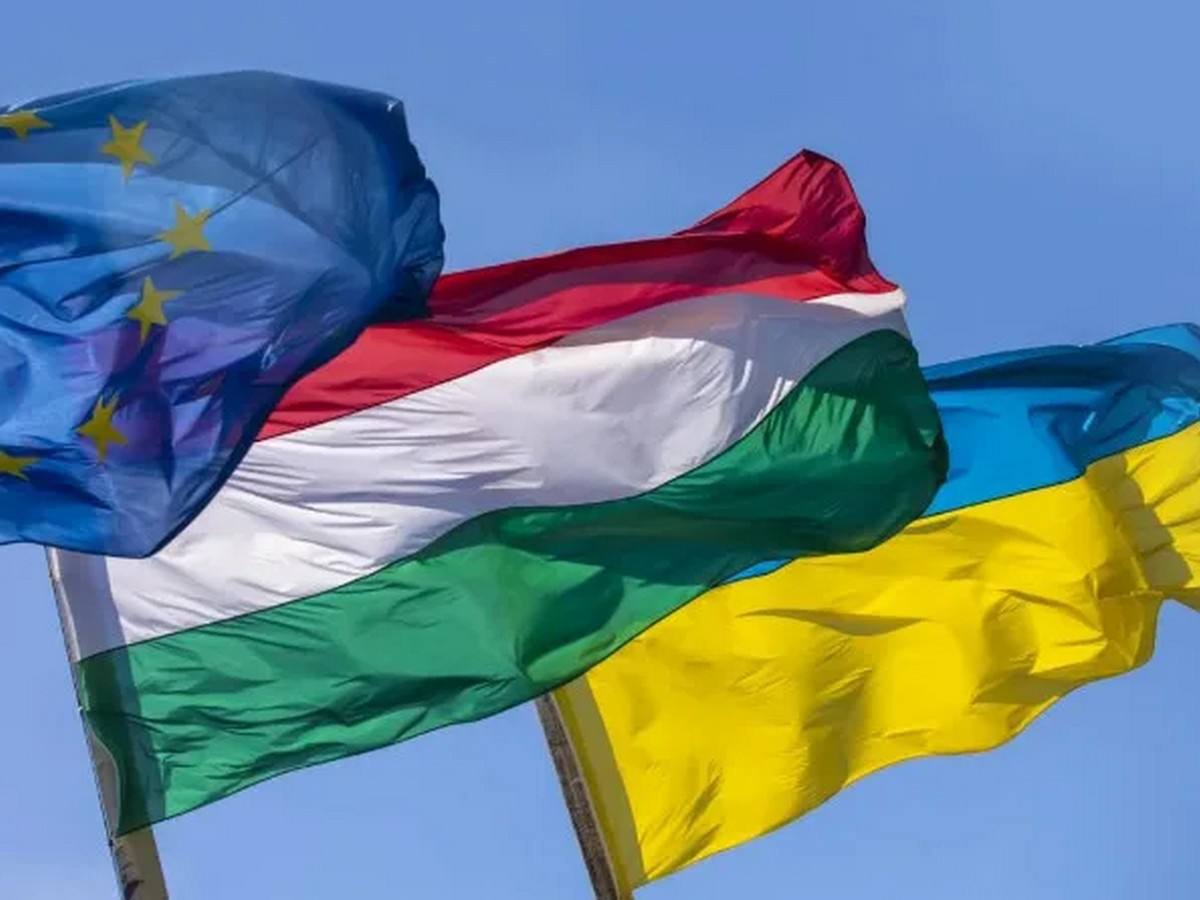
Hungary intends to continue providing protection to Ukrainian men of conscription age
The Hungarian Government reserves the right to grant protection to Ukrainian men of conscription age who enter the country. This is reported by ‘European Truth’, citing a statement by the Hungarian Prime Minister, Péter Magyar. According to him, a few weeks ago the European Union adopted a decision under which Ukrainian men of conscription age who have problems with their military registration documents will not be able to receive temporary protection in EU countries. Hungary, the Prime Minister said, voted against this decision. “At the same time, the government has decided that Hungary will act differently and continues to reserve the right to grant refugee status to men of conscription age who flee to Hungarian territory,” Magyar stated. He clarified that this primarily concerns ethnic Hungarians from Transcarpathia. The Hungarian Prime Minister also criticised the EU’s decision, stating that he considers it “unworthy and incomprehensible”, as, in his view, it effectively restricts the ability of fathers and grandfathers to leave a country that is at war. 📌 As a reminder, at the end of July, the EU extended temporary protection for Ukrainians until 4 March 2028. At the same time, additional conditions apply to newly arrived Ukrainian citizens subject to military service, particularly regarding military registration documents. Ukrainians planning to move to Hungary should check the final conditions for obtaining protection immediately before their journey, as the rules are subject to change.
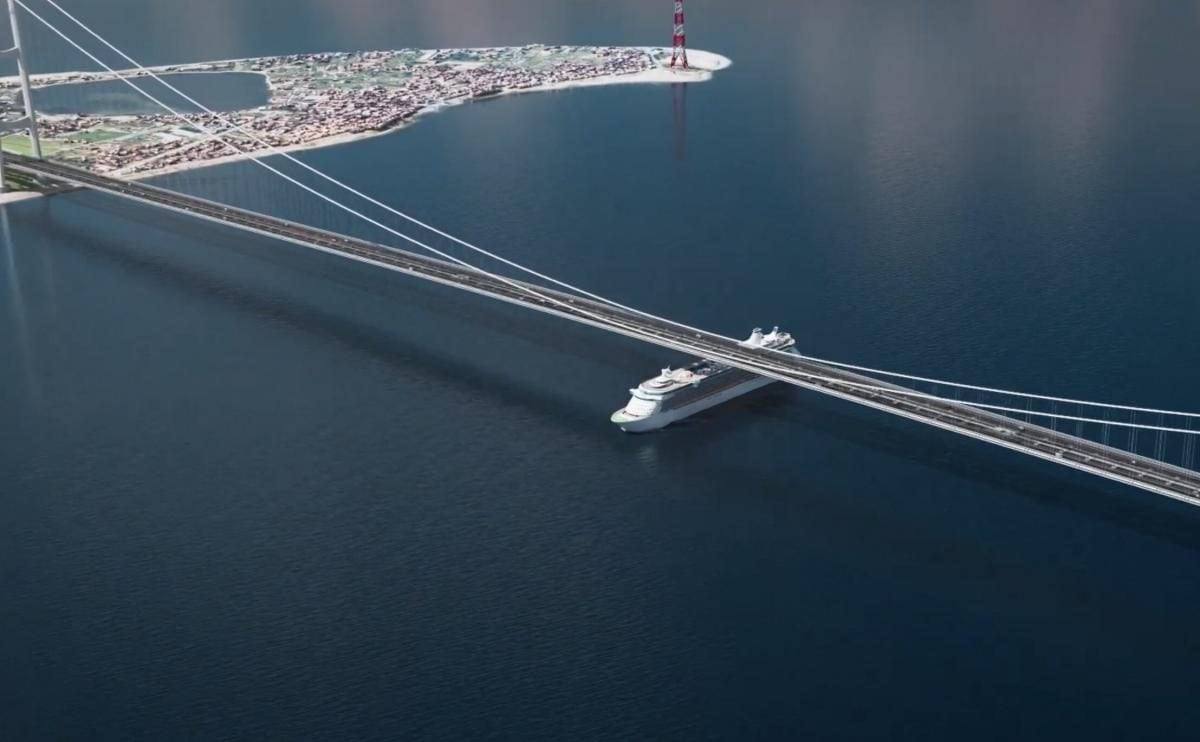
Taller than the Empire State Building: the world’s longest suspension bridge is to be built in Italy
🇮🇹 Plans have been approved in Italy for the construction of the world’s longest suspension bridge. The bridge across the Strait of Messina, which will link Sicily with mainland Italy, is set to become the world’s longest suspension bridge. The cost of this large-scale project is estimated at approximately €13.5 billion, and construction is expected to be completed in 2032–2033. The bridge will be 3,666 metres long. It will have six lanes for road traffic and two railway tracks. It is expected that the bridge will be able to handle up to 200 trains a day and around 6,000 cars an hour. The design features two support towers, each 399 metres high — taller than the Empire State Building in New York. Particular attention was paid to safety during the design phase. The Strait of Messina is situated in a seismically active region, near the boundary between the African and Eurasian tectonic plates. According to the project specifications, the bridge is designed to withstand an earthquake of magnitude 7.1 and wind gusts of up to 216 km/h. There will be a toll to cross the bridge. The estimated cost for a passenger car will be €4–7 per journey. The construction of the bridge is set to significantly transform transport links between Sicily and mainland Italy and become one of the country’s most ambitious infrastructure projects.
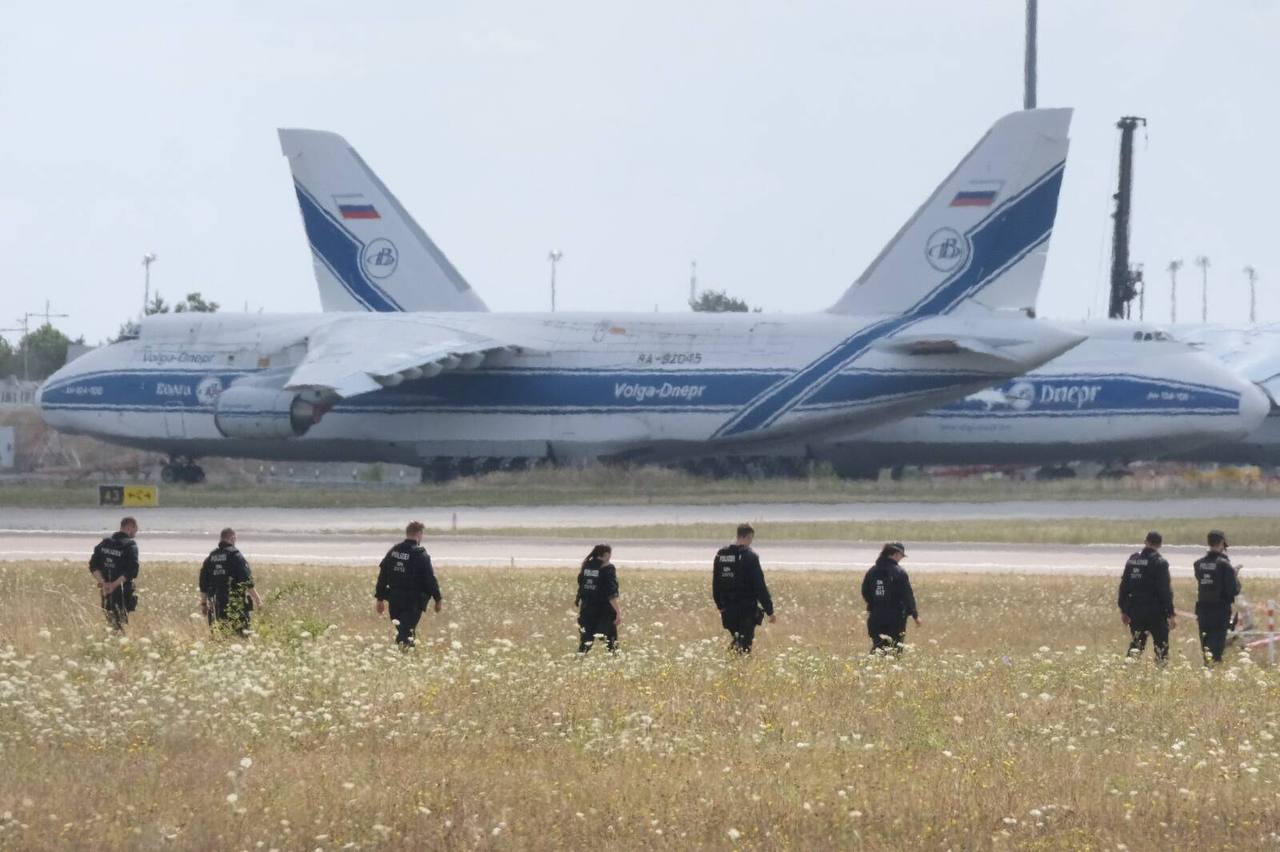
The EU may tighten visa restrictions on Russian tourists due to the threat of terrorist attacks
The European Union is discussing a travel ban on former Russian combatants and tighter visa restrictions for Russian tourists. During an informal meeting of EU foreign ministers in Wicklow, Ireland, on 2 September, the initiative received broad support. This was stated by the EU’s High Representative for Foreign Affairs, Kaja Kallas. “There was broad support for introducing an entry ban into the EU for former Russian combatants and tightening visa restrictions for Russian tourists,” said Kallas. The debate intensified following reports that one of the Russians suspected of attempting to blow up a Ukrainian passenger aircraft at Leipzig Airport may have entered the EU on a tourist visa issued by Italy. Kallas emphasised that the case illustrates how tourist visas can be used by people planning acts of sabotage to infiltrate the EU. “It is unacceptable that a country is bombing Ukraine, killing more civilians in July and August than at any other time during this war, — and at the same time, Russians are entering and enjoying the hospitality of European countries,” Kallas noted. She added that the security of the European Union is also under threat. “In fact, such tourist visas are being used for acts of sabotage, as these people need to get into the European Union,” stated the EU’s top diplomat. For his part, Italian Foreign Minister Antonio Tajani announced that the authorities would investigate the circumstances surrounding the issuance of a visa to one of the suspects in the Leipzig attack case. “An investigation will be carried out,” said Tajani. He called on European countries to remain vigilant, as states seeking to harm the EU may utilise individuals with no criminal records or prior suspicions against them. Consequently, the EU is considering tightening its visa policy towards Russian citizens not only as a sanction but also as a security measure and a means of preventing acts of sabotage.
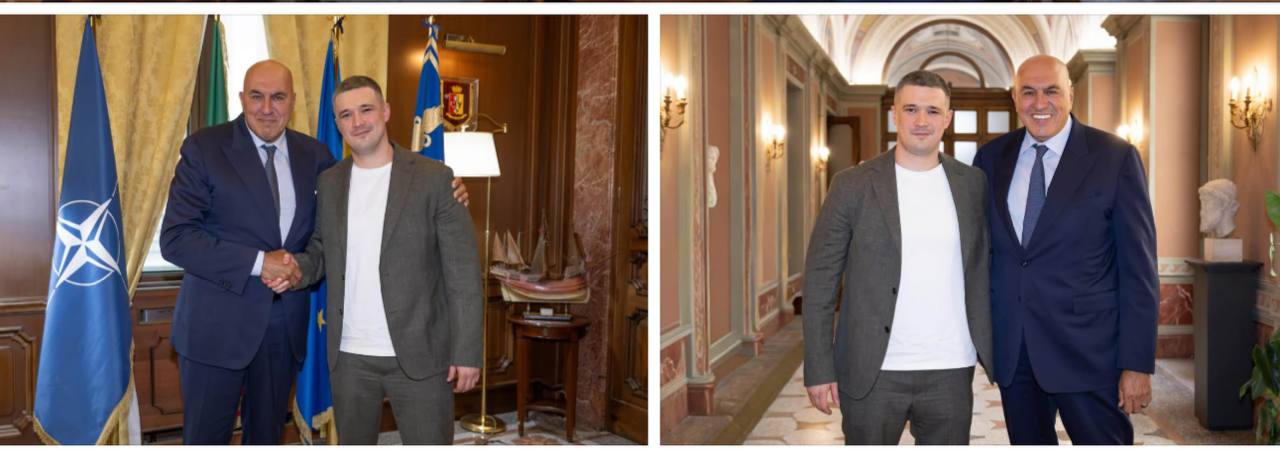
Mykhailo Fedorov will remain in Ukraine, despite his role as an adviser to the Italian Minister of Defence
The press office of Ukraine’s former Defence Minister Mykhailo Fedorov has explained his appointment as an adviser to the Italian Defence Minister, Guido Crozetto, on defence innovation. They emphasised that Fedorov’s previous position does not impose any restrictions on his work as an adviser to the government of another state. His role does not involve the disclosure of state secrets, the transfer of classified information or technical documentation with restricted access. The press office noted that the engagement of former senior officials as experts and advisers to foreign governments is common international practice. According to the press service, Fedorov will focus primarily on sharing managerial and expert experience in the field of technological warfare and defence innovation. “Such cooperation is also important for Ukraine, as it deepens collaboration with NATO countries and their defence industries, and creates new opportunities for Ukrainian defence-tech companies, joint development projects and investment ventures,” the press office stated. They also emphasised that Fedorov will continue to live and work in Ukraine. His main focus will remain on assisting Ukraine in the war against Russia. According to the press office, Fedorov plans to pursue other international projects in parallel, including the development of a think tank and an innovation fund that will invest in Ukrainian technologies and weaponry. As a reminder, on 28 August, Fedorov announced that he had accepted Guido Crozetto’s offer to become his adviser.
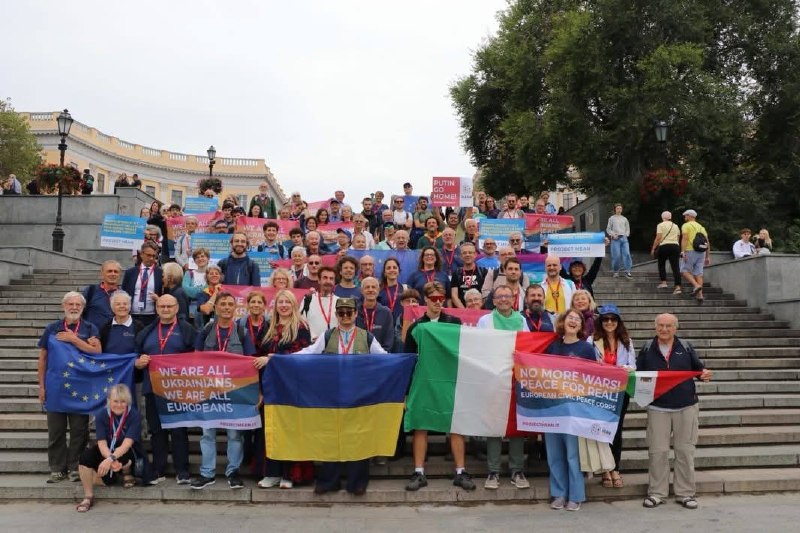
130 Italian activists visited Odessa as part of a peacekeeping mission
From 25 to 28 August 2026, MEAN — Movimento Europeo di Azione Nonviolenta (European Movement for Non-Violent Action) carried out the ‘Adesso, Odesa’ mission in Ukraine. A total of 130 Italian activists travelled to Odesa to meet with Ukrainian young people, civil society organisations, religious communities, representatives of local authorities and civil society. The aim of the mission was not only to express solidarity with Ukraine, but also, through their physical presence, dialogue and human connections, to support Ukrainians and strengthen cooperation between civil society in Ukraine and Europe. The participants met with students, volunteers, representatives of institutions and residents of Odesa, discussing the future of Ukraine and Europe and talking about the role of non-violent action in building peace. The mission participants described their experience in Odessa as follows: ‘Last night, Odessa came under shelling that lasted several hours. We shared with the city the sound of the air-raid siren, the anticipation, the fear and the uncertainty. That is precisely why we are in Odesa: so as not to leave the civilian population on their own and to support those who have been living through the war and in spite of it for over four years. Even after this morning’s air strike, Odesa carries on. The streets are filling up, people are getting back to their daily lives, and the city is holding firm with great resilience.” The conclusion of the mission was particularly symbolic. Italian and Ukrainian participants gathered outside the Odessa National Academic Theatre of Opera and Ballet and sang the Italian song ‘Bella ciao’ together — a song that has become a symbol of resistance and solidarity in both Italy and Ukraine. Afterwards, the participants made their way to the Potemkin Stairs, singing and holding placards reading ‘Putin go home’. This spontaneous gesture served as a kind of farewell to Odesa and, at the same time, a demonstration of support for the Ukrainian people. This is precisely how the organisers of MEAN see the meaning of non-violent action and international solidarity.
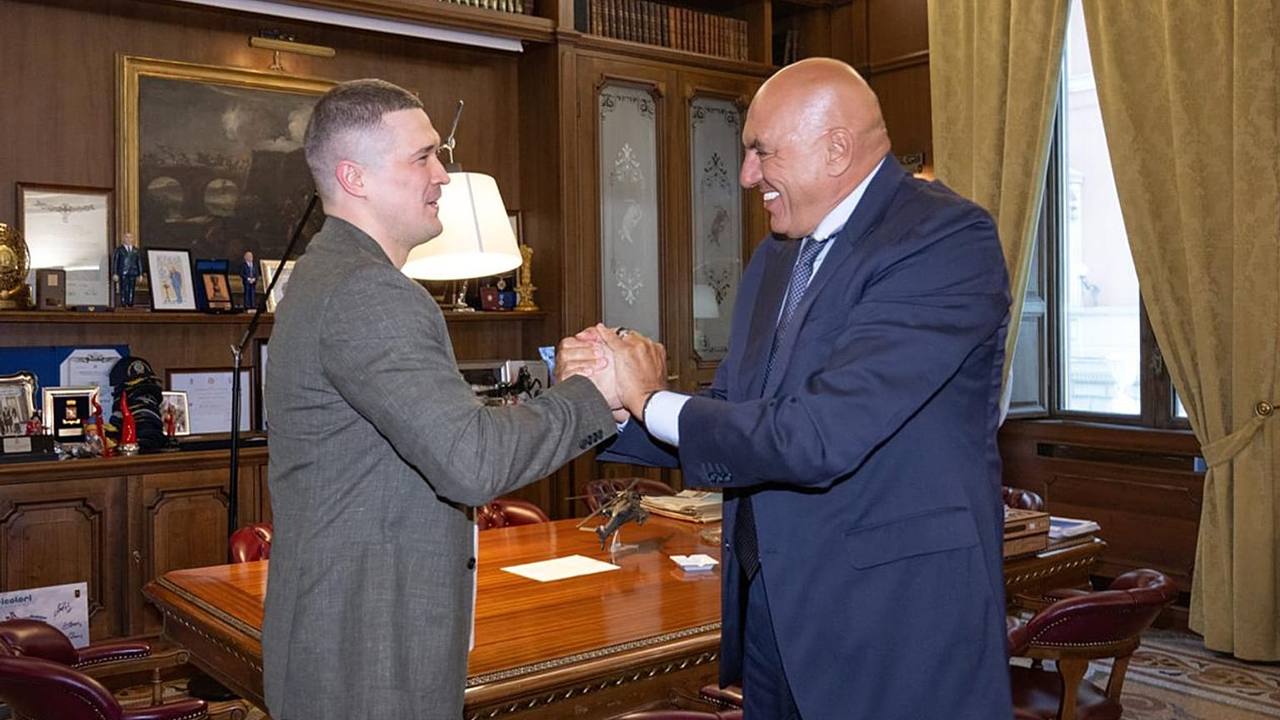
Mykhailo Fedorov has been appointed adviser to the Italian Minister of Defence
Mykhailo Fedorov, Ukraine’s former Minister of Defence, has been appointed as an adviser to Italy’s Minister of Defence, Guido Crosetto, on defence innovation. Fedorov will advise the Italian Ministry of Defence on the development of modern military technologies and the strengthening of the defence tech sector. Key areas of cooperation include drones and unmanned systems, autonomous technologies, air defence, digital solutions and the development of the defence technology ecosystem. Ukraine’s experience is particularly valuable for Italy, as the war in Ukraine has become a major test for modern technologies on the battlefield. Ukraine is actively developing unmanned systems, robotic solutions and innovative approaches to defence. At the same time, Mykhailo Fedorov will continue to work in Ukraine on projects aimed at strengthening the country’s defence capabilities and attracting international resources. 🇺🇦🇮🇹 This is yet another example of how Ukrainian technological and managerial expertise is becoming an important part of European security cooperation. Ukrainian expertise — for strengthening European security.
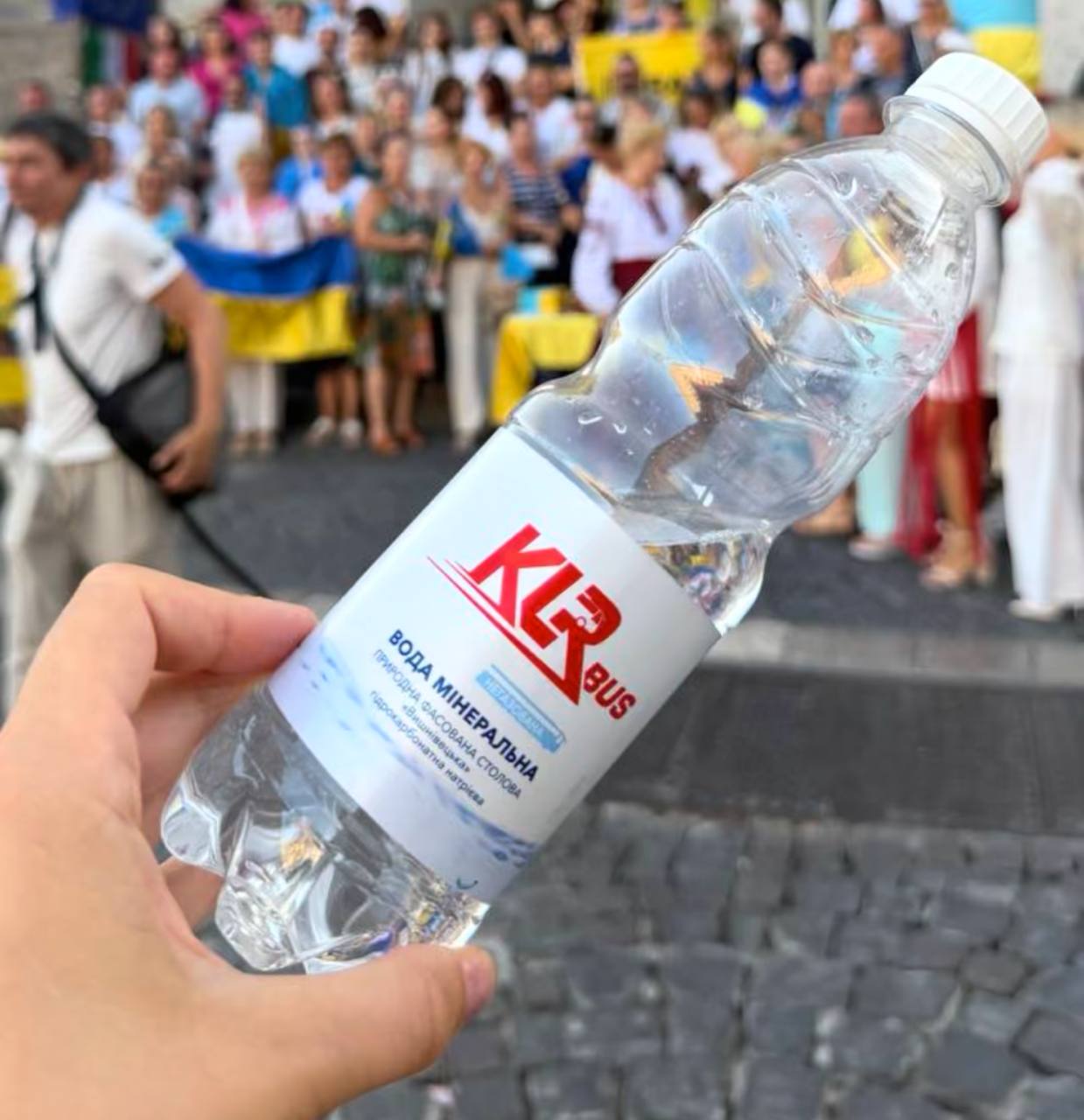
KLR supported a rally in Naples to mark Ukraine’s Independence Day
The Ukrainian transport company KLR has partnered with a rally in Naples marking the 35th anniversary of Ukraine’s independence. The company provided all participants with drinking water, demonstrating its support for the Ukrainian community and important patriotic initiatives abroad. Thank you to KLR for supporting Ukraine, Ukrainians and events that unite our community around freedom, independence and love for our homeland! Note from UA Service Hub: KLR is a Ukrainian transport company specialising in passenger coach services, including international routes between Ukraine and European countries. In June 2026, the company began operating services to Ukraine from Italy. A premium-comfort coach departs from Naples every Wednesday and Sunday.
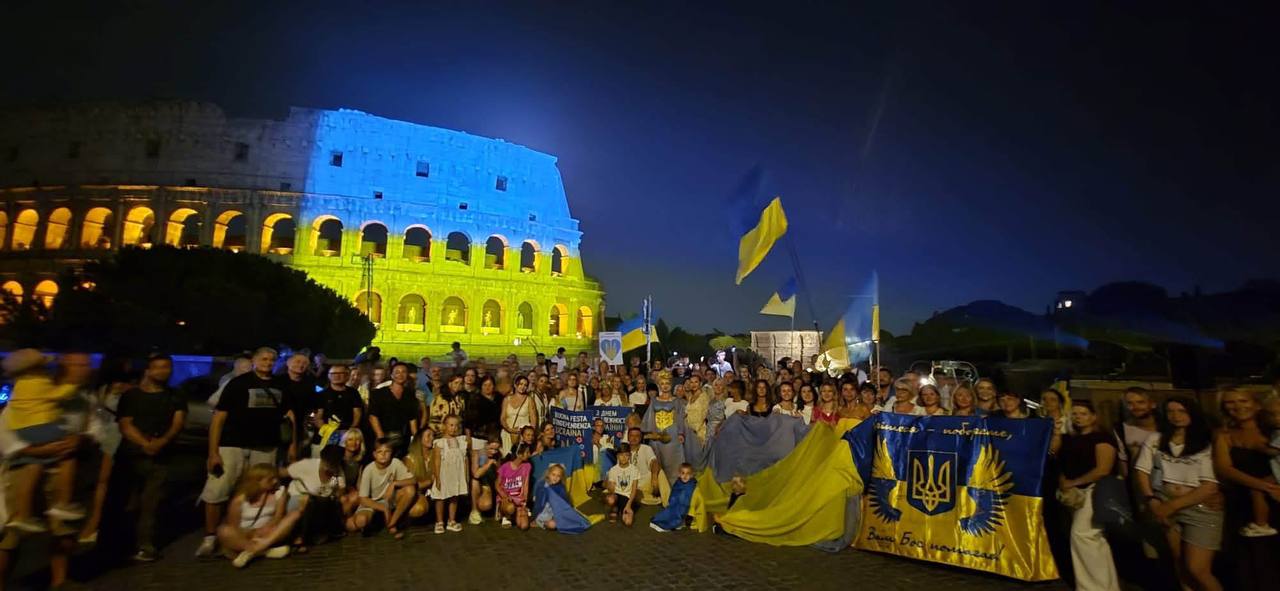
The Colosseum in Rome was lit up in blue and yellow in honour of Ukraine’s Independence Day
Rome, 24 August 2026. On Ukraine’s Independence Day, the Colosseum — one of Italy’s most famous landmarks — was illuminated in blue and yellow. In this way, Rome joined in the celebrations marking the 35th anniversary of Ukraine’s independence and demonstrated its solidarity with the Ukrainian people. 🇺🇦💙💛 A rally was held near the Colosseum attended by Ukrainian activists, community representatives and friends of Ukraine. The event was attended by Ihor Brusilo, Ukraine’s Ambassador Extraordinary and Plenipotentiary to Italy, who addressed those present and expressed his support for the Ukrainian community. A group of Ukrainian activists from Naples, led by Tetyana Onyskiv, President of the Dateci Le Ali association, travelled to Rome especially for the occasion. For the participants, this trip was not merely an opportunity to take part in an official event, but a symbol of the unity of Ukrainians who, whilst far from their homeland, continue to support Ukraine and remind the world of its struggle for freedom. Against the backdrop of the blue-and-yellow Colosseum, the Ukrainians raised their national flags, sang the Ukrainian national anthem, paid tribute to the fallen heroes and took part in a fundraising drive for the Ukrainian Armed Forces. The Christian Association of Ukrainians in Italy (Associazione Cristiana degli Ucraini in Italia) and Ukrainian activists helped to organise and coordinate the event. The organisers expressed special thanks to Oles Horodetskyi for organising and coordinating the event, as well as to the Embassy of Ukraine in Italy and Ambassador Ihor Brusyl for their initiative and support of the Ukrainian community. “For me, as president of the Dateci Le Ali association, this was a special day. A day of unity, remembrance and resilience. We came from Naples not just for the event – we came to show that Ukraine is united, wherever we live, and that our struggle for freedom continues,” said Tetyana Onyskiv. The participation of the Neapolitan delegation served as yet another reminder: Ukrainians in Italy remain a united community, regardless of where they live.
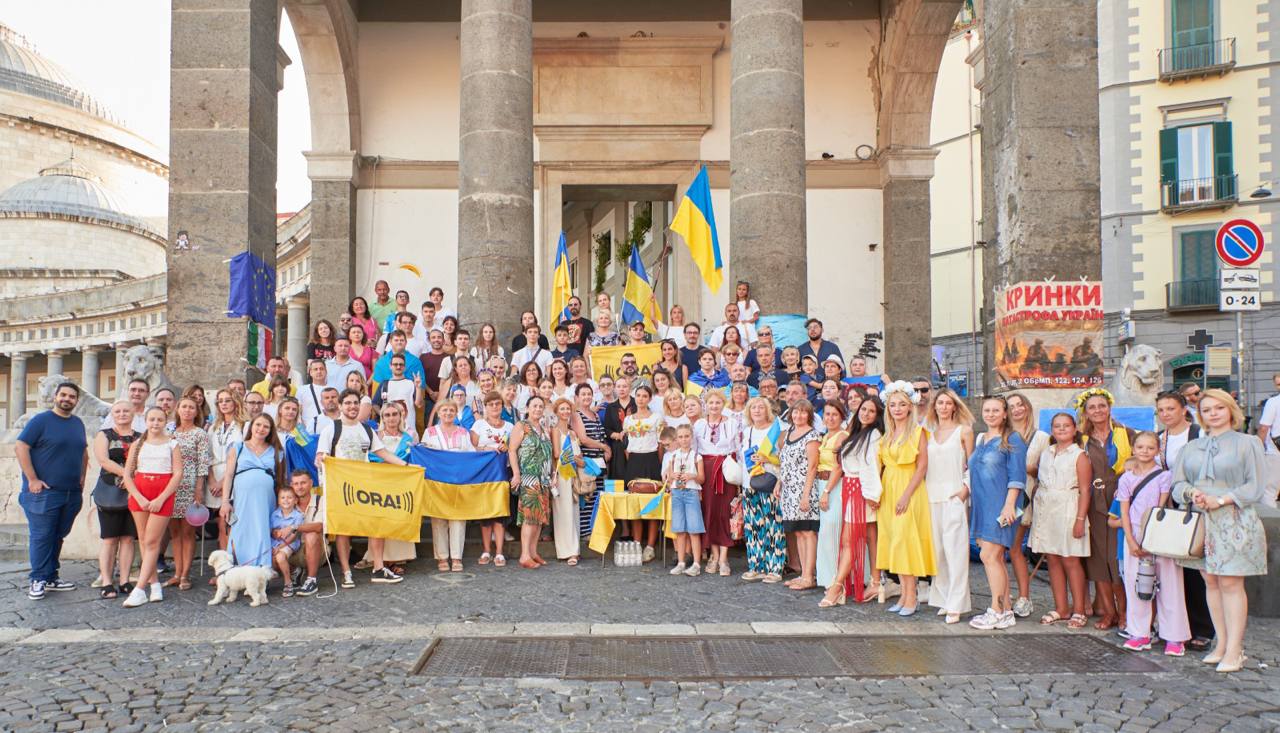
Ukraine’s Independence Day was celebrated in Naples – with a traditional loaf of bread and a large flag
Naples marked the 35th anniversary of Ukraine’s independence: culture, solidarity and traditions in Plebiscite Square, Naples, 23 August 2026 — Plebiscite Square was transformed into a vast space of solidarity and support for Ukraine to mark the 35th anniversary of the restoration of Ukraine’s independence. The initiative, organised by CRASA APS – Comunità dei Rifugiati: Attività, Sviluppo, Arte, brought together the Ukrainian community in Naples, representatives of public institutions, Italian civil society and numerous local residents. One of the most moving moments of the day was the unfurling of a huge Ukrainian flag, which bathed Plebiscito Square in blue and yellow. It was a symbolic gesture dedicated to the freedom, unity and resilience of the Ukrainian people. The event was accompanied by a prayer for Ukraine and peace, Ukrainian patriotic songs and a photo exhibition showcasing Ukrainian identity, culture and the realities of modern-day Ukraine. Larysa Polishchuk, Consul-General of Ukraine in Naples, addressed those present with a welcoming speech, emphasising the importance of preserving the memory of Ukraine’s independence and freedom. Speeches were also given by representatives of the Ukrainian community and representatives of the political groups ORA!, Liberaldemocratico, Radicali Italiani and Spazio Pubblico, as well as the association Liberi Oltre le Illusioni. The evening was complemented by musical performances that accompanied the festive programme. Singer Yamarina and violinist Olga Orekhova performed for the audience, evoking special emotions through Ukrainian music. A particularly memorable moment was the segment dedicated to Ukrainian fashion and culture. Ukrainian designer Viktoria Fenix created a dress inspired by Ukraine especially for this event, transforming national symbols into a true work of art through its intricate details. The event concluded with a traditional korovai. The large festive loaf was shared amongst the participants as a gesture of friendship and hospitality. “Modern Ukraine is celebrating its 35th anniversary.” And this is one of the most difficult years in its history. Ukraine is under attack every day and is being torn apart by the actions of external and internal enemies. We are far from our homeland, but our support is incredibly important. That is precisely why we are grateful to everyone who was with us on this important day,” said Zhanna Zhukova, president of the CRASA APS association. 23 August was not only a day of celebration but also an important occasion for the Ukrainian community to engage with the city of Naples — an opportunity to reaffirm the value of independence, preserve Ukrainian culture and once again express our desire for peace. Organiser: CRASA APS – Comunità dei Rifugiati: Attività, Sviluppo, Arte.