Our Blog
Useful articles and news

A tree containing Ukrainian soil will be planted in Sorrento on Ukraine’s Independence Day
On 24 August at 5.00 pm, a symbolic event to mark Ukraine’s Independence Day will take place at the Villa Comunale in Sorrento. This year, the Municipality of Sorrento (Comune di Sorrento) will plant a new tree near the memorial stone erected in support of Ukraine. The event will take on special symbolic significance thanks to Ukrainian soil brought from Kyiv. It will be placed beneath the tree’s roots — as a symbol of the unbreakable bond between Ukrainians and their homeland, even far beyond Ukraine’s borders. The organisers invite the Ukrainian community in Sorrento and all friends of Ukraine to join the event and celebrate Independence Day together. 📅 24 August 🕔 17:00 📍 Villa Comunale, Sorrento The new tree will become a symbol of life, remembrance and hope — and a reminder of Ukraine, which has been, is and will remain free and independent. 🇺🇦
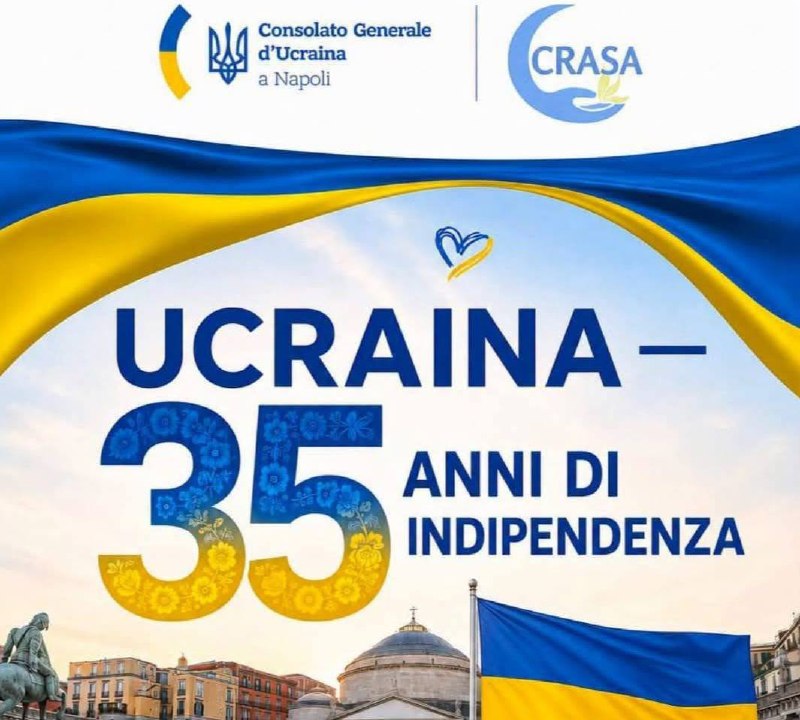
35 years of Ukrainian independence: Ukrainians across Italy are organising celebrations
On 24 August, Ukraine will mark the 35th anniversary of its independence. This year, Ukrainian communities in various cities across Italy have organised dozens of events to mark this important day. People are coming together to share stories about Ukraine and preserve Ukrainian culture far from home. 📍 Naples — a festive celebration in Piazza del Plebiscito. 📍 Rome — the ‘Roma con l’Ucraina’ march and an event to mark the 35th anniversary of independence. 📍 Trento — a cultural programme dedicated to Ukraine and its history. 📍 Treviso — celebrations under the slogan ‘Free! Strong! Independent!’. 📍 Bergamo — ‘Corteo in auto per l’Ucraina’ — a motorcade in support of Ukraine. 📍 Other cities will also host concerts, exhibitions, cultural gatherings, charity events and commemorative events. This year, Ukrainians in Italy will once again come together to show that independence is not just a date on the calendar. It is our history, our culture, our freedom and Ukraine’s right to be free. Wherever we may be, we remain part of Ukraine.
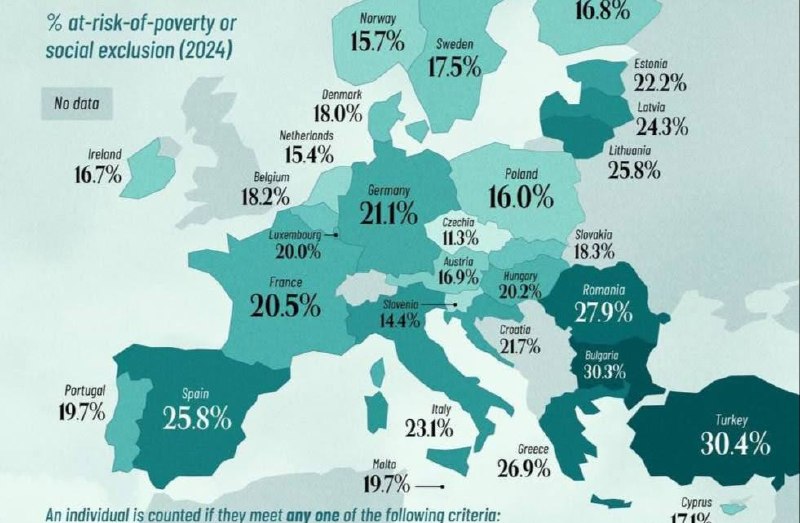
In which European countries are the most people at risk of poverty?
Europe is not just about high wages and social security. In some countries, a significant proportion of the population faces low incomes, inequality and the risk of social exclusion. 📊 Top 10 European countries by the proportion of the population at risk of poverty or social exclusion: 🇹🇷 Turkey – 30.4% 🇧🇬 Bulgaria — 30.3% 🇷🇴 Romania — 27.9% 🇬🇷 Greece — 26.9% 🇪🇸 Spain — 25.8% 🇱🇹 Lithuania — 25.8% 🇱🇻 Latvia — 24.3% 🇮🇹 Italy — 23.1% 🇪🇪 Estonia — 22.2% 🇭🇷 Croatia — 21.7% On average across the European Union, 21 per cent of the population — around 93.3 million people — were at risk of poverty or social exclusion. (European Commission) 📉 Lowest rates in the EU: 🇨🇿 Czech Republic — 11.3% 🇸🇮 Slovenia — 14.4% 🇳🇱 The Netherlands — 15.4% 🇵🇱 Poland — 16.0% 🇮🇪 Ireland — 16.7% 🇫🇮 Finland — 16.8% 🇦🇹 Austria — 16.9% 🇨🇾 Cyprus — 17.1% 🇸🇪 Sweden — 17.5% 🇮🇹 Italy — 23.1% Consequently, approximately one in four people in Italy were at risk of poverty or social exclusion. However, the situation varies greatly from region to region: for example, in Calabria, this figure stood at 37.2% in 2024 — one of the highest rates among EU regions. (European Commission) 🇺🇦 And what about Ukraine? Ukraine is not included in the Eurostat rankings as it is not an EU member state. According to World Bank estimates, the poverty rate in Ukraine last year stood at around 37 per cent, which is significantly higher than pre-war levels. In 2021, the figure was estimated at around 20 per cent. (The World Bank) ⚠️ Important: the ‘risk of poverty or social exclusion’ indicator is not simply the number of people with an income below a certain threshold. It takes into account several criteria, including low income, severe material and social hardship, or very low labour intensity. 💶 WHAT SHOULD THE MINIMUM INCOME BE IN EUROPE? This figure is often referred to as the ‘subsistence minimum’, but officially Eurostat uses the term ‘at-risk-of-poverty threshold’. It is equal to 60 per cent of the median income in a given country. In other words, a person whose income is below this level is statistically considered to be at risk of poverty. 📊 At-risk-of-poverty threshold for a single person, € per month: 🇱🇺 Luxembourg — €2,540 🇩🇰 Denmark — over €1,600 🇦🇹 Austria — over €1,500 🇮🇪 Ireland — over €1,500 🇳🇱 Netherlands — over €1,400 🇧🇪 Belgium — over €1,300 🇩🇪 Germany — €1,381 🇫🇷 France — €1,278 🇮🇹 Italy — €1,030 🇪🇸 Spain — €965 🇵🇱 Poland — around €700 🇵🇹 Portugal — less than €750 🇬🇷 Greece — less than €750 🇭🇷 Croatia — less than €750 🇱🇹 Lithuania — less than €750 🇸🇰 Slovakia — less than €750 🇭🇺 Hungary — less than €500 🇷🇴 Romania — less than €500 🇧🇬 Bulgaria — €391 🇪🇺 EU average — around €1,079 per month. ⚠️ But it’s important to note: this doesn’t mean that €1,079 is enough for a comfortable life. The figure reflects the relative level of income within a country and does not take into account the actual cost of rent, food, transport and other expenses. For example, the threshold in Italy is around €1,030, but in Milan, Rome or Naples, housing costs can account for a significant proportion of this amount.
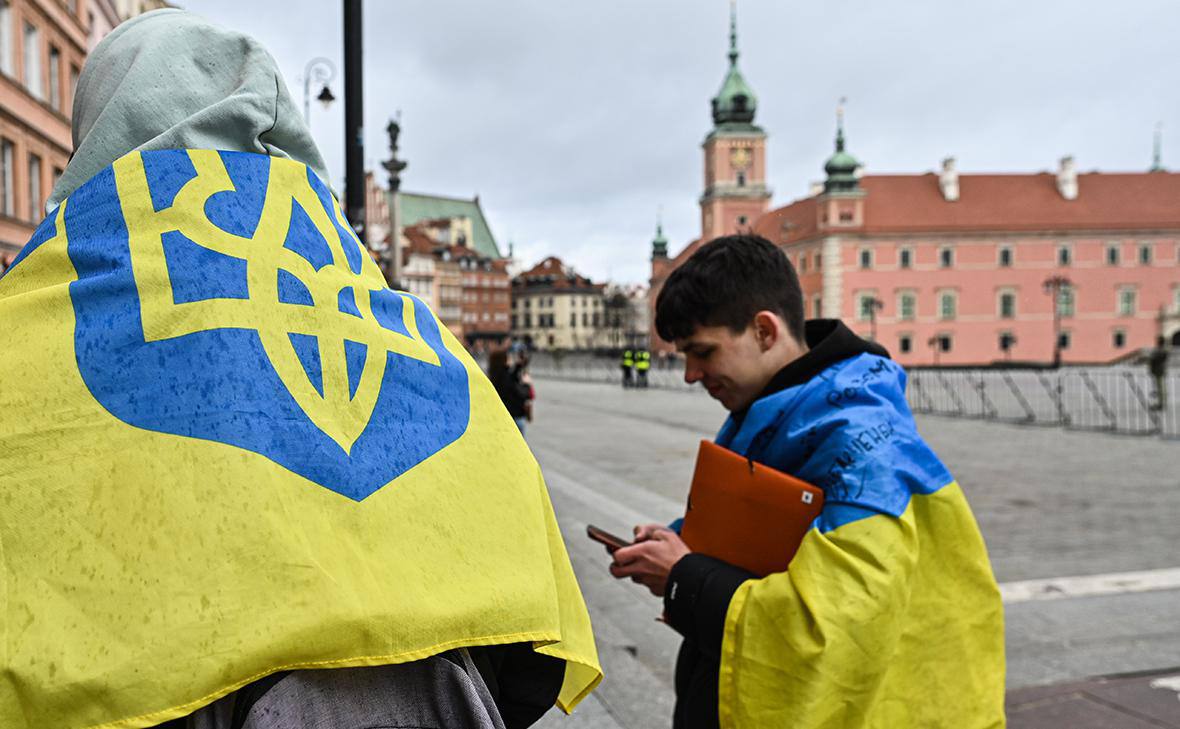
There are calls in Poland to deport Ukrainians who are not in employment
In Poland, debate is gathering momentum over the idea of deporting Ukrainian men of conscription age who do not have legal employment from the country. The initiative was put forward by representatives of the opposition party Prawo i Sprawiedliwość (PiS). At present, this is a political proposal rather than an existing law or a decision on mass deportation. PiS MP Andrzej Szlówka stated that the Polish authorities should identify people who are in Poland illegally or do not have official employment, and set a deadline for them to return to Ukraine. “Even if it’s 5 per cent, that’s at least a brigade, or even a division, of people who can be organised and who can fight for their country,” said Śliwka. According to him, such measures are also necessary for Poland’s security. However, according to UA Service HUB, there is currently no confirmation that the Polish authorities have decided on the mass deportation of Ukrainian men. This refers specifically to a political initiative and statements made by a PiS representative. At the same time, against the backdrop of this debate, the Ukrainian community in Poland is increasingly drawing attention to incidents of aggression and attacks on Ukrainians. Anti-Ukrainian sentiment is growing within Polish society, and certain political statements are only serving to intensify the debate surrounding the presence of Ukrainians in the country.
Assault on Ukrainians in Poland: two suspects have been arrested, a third is wanted
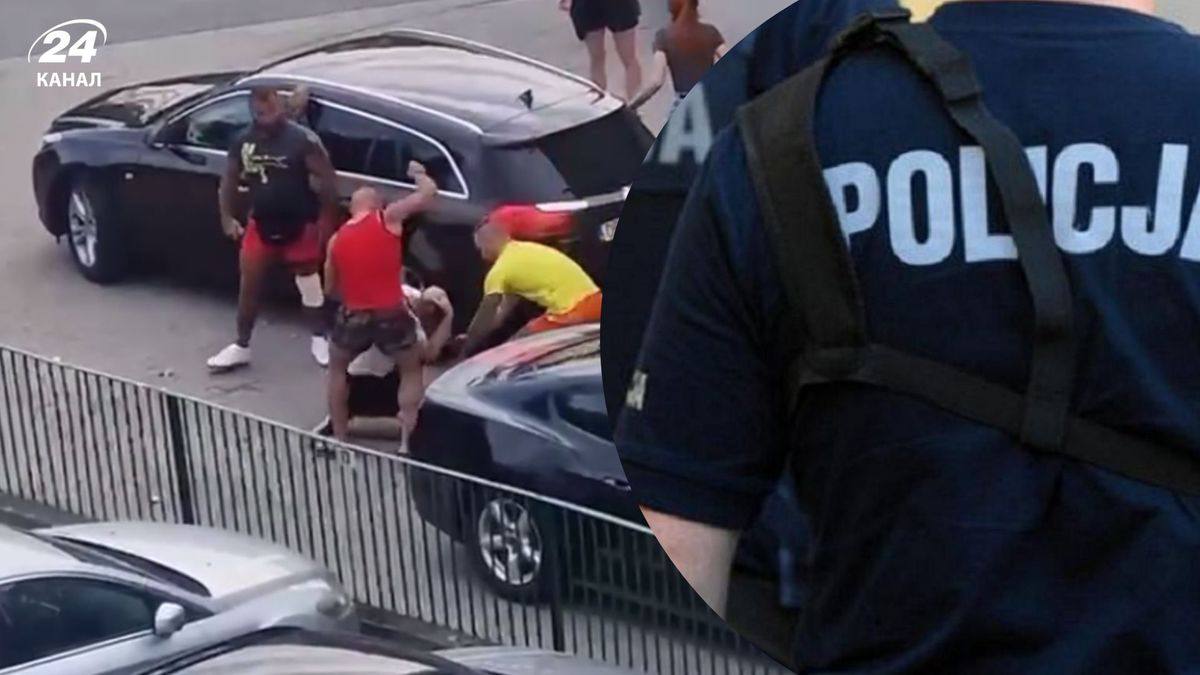
An investigation is underway in Poland into the high-profile attack on a Ukrainian couple in Wrocław. The police have already arrested two men, aged 27 and 45, who are suspected of brutally beating the Ukrainian nationals. According to Polish media reports, one of the detainees has a previous criminal record and has taken part in bare-knuckle fights, whilst the other is a mixed martial arts (MMA) fighter. Preliminary reports suggest the altercation began in a ‘Żabka’ shop over a queue. Once outside, the argument escalated into an assault, during which a Ukrainian man and a Ukrainian woman were injured. Law enforcement officers are continuing to search for the third person involved in the incident. All those involved could face up to five years’ imprisonment. Polish Prime Minister Donald Tusk has responded to the incident. He stated that the rise in violence is linked to the fact that radical groups feel they have political support. Tusk also called on Polish President Karol Nawrocki to respond publicly to the situation and draw attention to the activities of radical groups. “We must wage a resolute fight against this violence, as thugs, hooligans and the culture of violence are becoming increasingly brazen. This is also linked to the fact that they feel they have political backing,” emphasised the head of the Polish government. The Prime Minister expressed his hope that the law enforcement agencies would promptly apprehend all those responsible, and that the courts would ensure fair punishment. He also stressed that attacks on Ukrainians run counter to Poland’s interests, and called on citizens to report any instances of violence or hate crimes to the police. As a reminder, UA Service HUB previously reported that a Ukrainian couple were brutally beaten in Wrocław following a dispute which, according to eyewitnesses, was accompanied by insults directed at their Ukrainian accent. The investigation is ongoing.
Мер Вроцлава засудив напад на українців: «У нашому місті немає місця ксенофобії»
Мер Вроцлава Яцек Сутрик виступив із публічною заявою після жорстокого нападу на молоду українську пару. Він наголосив, що у місті немає місця насильству, дискримінації та злочинам на ґрунті ненависті. «Кожна людина, незалежно від того, якою мовою вона розмовляє, звідки походить чи у що вірить, має право почуватися у Вроцлаві в безпеці. Напад через походження — це напад на всю нашу спільноту», — заявив мер. Він висловив підтримку постраждалим, закликав поліцію якнайшвидше встановити та покарати винних, а також звернувся до мешканців із проханням не залишатися байдужими: повідомляти про подібні випадки правоохоронцям і, якщо це безпечно, фіксувати їх на фото чи відео. Окремо мер застеріг політиків і громадських діячів від риторики, яка ділить людей на «своїх» і «чужих», підкресливши, що такі висловлювання можуть провокувати реальне насильство. Нагадаємо, у Вроцлаві було жорстоко побито молоду українську пару. За повідомленнями польських ЗМІ, напад мав ознаки злочину на ґрунті національної ненависті. Інцидент викликав широкий суспільний резонанс і став приводом для публічної реакції міської влади. За даними UA Service HUB, сьогодні Польща залишається країною з найбільшою українською громадою в Європі. За різними офіційними оцінками, у країні перебуває близько 2 мільйонів громадян України, включно з людьми, які прибули після початку повномасштабної війни, а також тими, хто проживав і працював у Польщі раніше. Подібні заяви місцевої влади є важливим сигналом підтримки для української громади та підтверджують, що боротьба з ксенофобією і захист прав людини залишаються одним із пріоритетів демократичних європейських суспільств.
An experienced civil servant has been appointed head of the Consulate-General of Ukraine in Naples
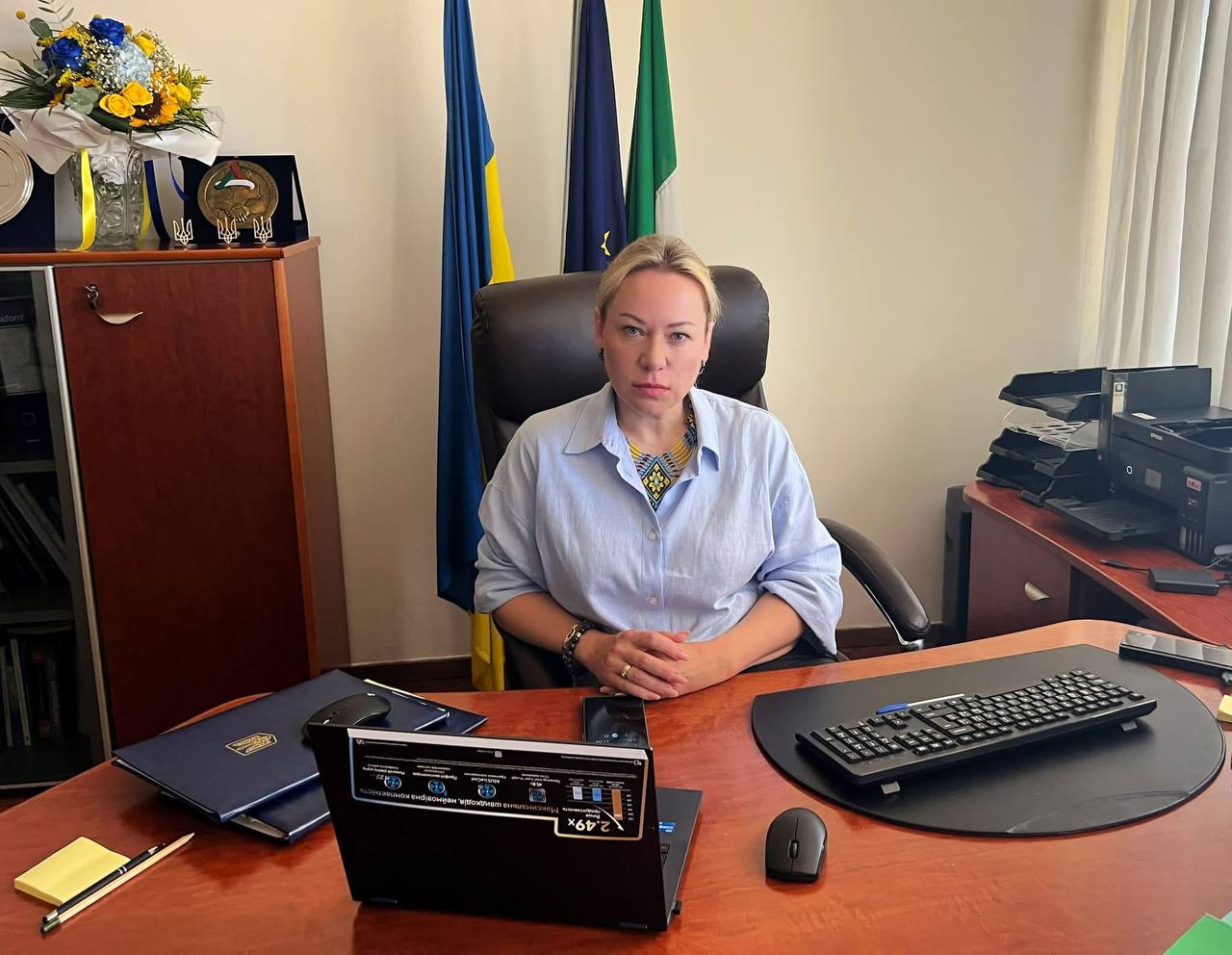
Larysa Polishchuk, the newly appointed Consul-General of Ukraine, has taken up her post at the Consulate-General of Ukraine in Naples. Ms Larysa Polishchuk has over 25 years’ experience in the civil service. Throughout her career, she has worked at the Ministry of Economy of Ukraine, the Secretariat of the Cabinet of Ministers of Ukraine and the Ministry of Foreign Affairs, dealing with issues of foreign policy, international economic cooperation and European integration. The new Consul General’s key priorities include protecting the rights and interests of Ukrainian citizens, ensuring high-quality consular services, supporting the Ukrainian community in Southern Italy and developing the Ukrainian-Italian partnership. Particular attention is to be paid to protecting the rights of Ukrainian children who are in Italy as a result of the full-scale war. This involves preserving their legal ties with Ukraine, supporting their national identity and cooperating with the Italian authorities to safeguard the best interests of every child in accordance with Ukrainian legislation and international law. The Consulate General of Ukraine in Naples has announced that it will continue to cooperate actively with the Italian authorities, the Ukrainian community, civil society organisations, and educational and cultural institutions to support Ukrainians and strengthen friendly relations between Ukraine and Italy. We wish Ms Larisa Polishchuk every success, inspiration and fruitful work for the benefit of the Ukrainian community and the development of Ukrainian-Italian cooperation.
Recruitment for the Create Ukraine programme: Ukrainians abroad are being encouraged to work for the Government
If you have studied abroad or have international professional experience, you have the opportunity to contribute to Ukraine’s reconstruction, and this could be an important step in your career. The Create Ukraine programme has opened applications for its third cohort of participants. It offers Ukrainian professionals living abroad the opportunity to return to Ukraine and work for a year within government bodies, implementing projects of national importance. Programme participants will receive: 🔹 a paid one-year contract to work for the Government of Ukraine; 🔹 the opportunity to work directly with ministers and their deputies; 🔹 the chance to contribute to strategically important government projects; 🔹 a certification course in Government Relations at the Kyiv School of Economics. Who can apply? ✔️ Ukrainian citizens aged 22 or over; ✔️ Ukrainians who have been living abroad for at least two years and are ready to return; ✔️ candidates with an international education or professional experience; ✔️ motivated professionals who wish to influence the country’s development. .📅 Applications can be submitted up to and including 14 August. Applications should be sent to: foundation.kse.ua According to UA Service HUB, the programme is funded by the Lithuanian Fund for Development Cooperation and Humanitarian Aid. It is implemented by the Lithuanian Centre for International Partnership in collaboration with the KSE Foundation, with the support of the Lithuanian Ministry of Foreign Affairs and in close cooperation with the Government of Ukraine. For many Ukrainians living abroad, this is an opportunity to use the knowledge and experience they have gained to contribute to the country’s development, as well as to build a career in public administration.
Young Ukrainians living in Naples and the surrounding area are invited to attend a modern church school
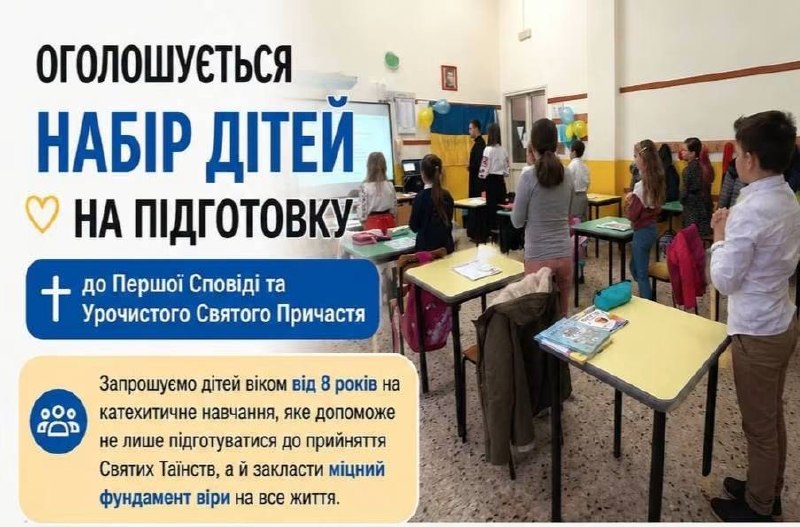
The Ukrainian community in Bagnoli (Naples) and Giuliano in Campania invites children aged 8 and over to attend catechism classes in preparation for their First Confession and Solemn First Holy Communion. The programme is designed not only to help children prepare to receive the Holy Sacraments, but also to lay a solid spiritual foundation that will serve as a pillar of support throughout their lives. The course begins on 6 September 2026. Classes will take place twice a week: one lesson online and one in church. Modern interactive teaching methods will be used during the catechism classes, including presentations, video materials, creative tasks and lively discussion. This format will help children to discover God with enthusiasm, gain a deeper understanding of the Christian faith and learn to live it out in their daily lives. The catechism classes will be led by Fr Andriy Shabanov, chaplain to the Ukrainian community in Bagnoli (Naples) and Giuliano in Campania. Registration and further information: ☎️ +39 351 983 3797 (Fr Andriy Shabanov)